Marine Biodiversity Conference highlights the Balearic fishing fleet and encourages it to keep moving towards more sustainable fishing
Published 05.11.2026
Share
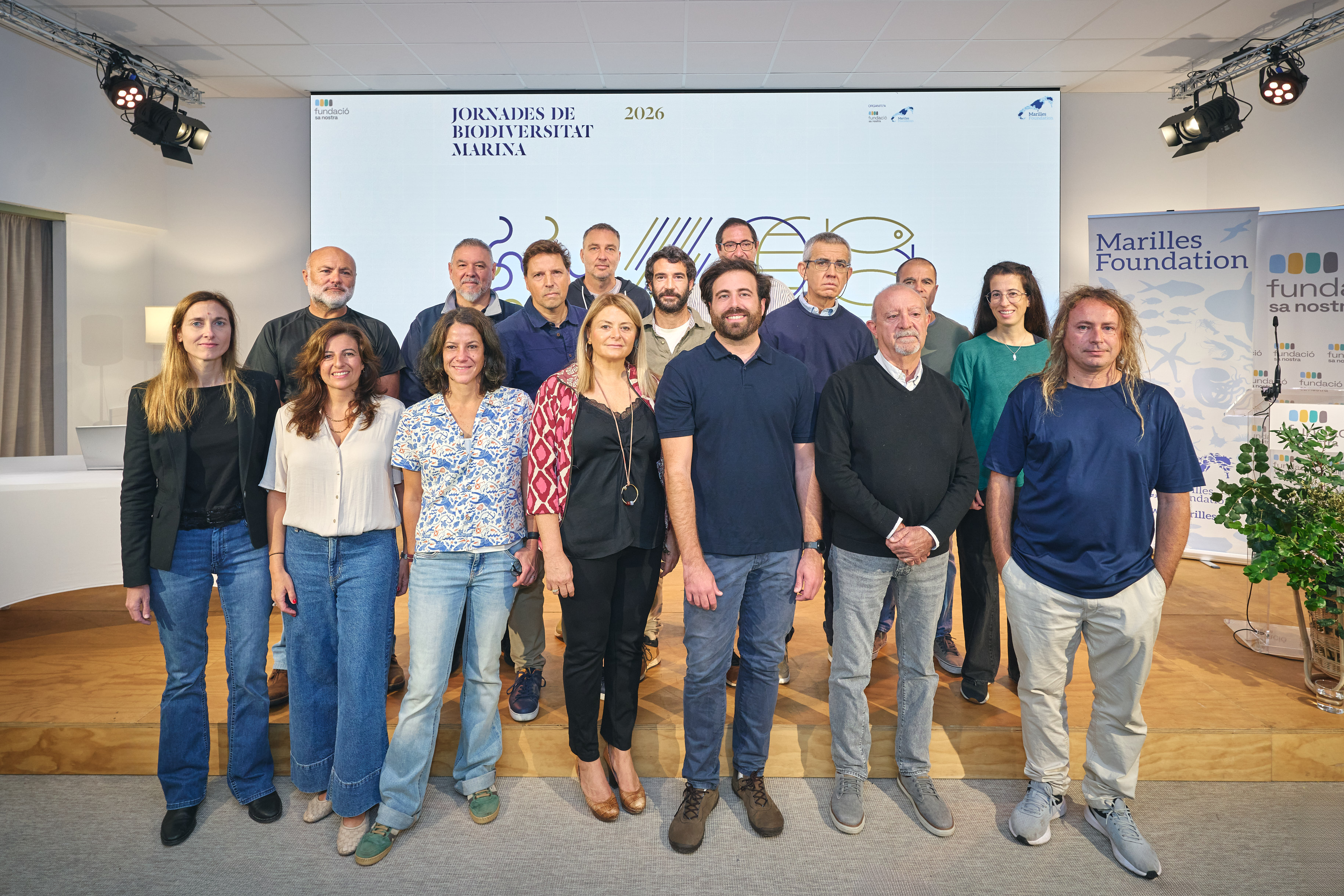
Researchers, and representatives of the fishing sector and organisations dedicated to marine conservation took part in the final session of the 3rd Balearic Marine Biodiversity Conservation Conference, held at Can Tàpera in Palma. The meeting showcased successful initiatives and good practices within the Balearic fleet, as well as the progress made on implementing measures that support marine biodiversity conservation. Strengthening scientific knowledge to improve marine resource management and reduce impacts on biodiversity is key to achieving this.
Various experts shared projects and research findings relating to habitat and species recovery, fishing activity monitoring, and accidental catch reduction. Talks addressed topics such as the recovery of maerl beds (calcareous algae) and kelp (algae of the genus Laminaria) in the Menorca Channel, presented by Enric Massutí of the Balearic Oceanographic Centre (COB-IEO-CSIC), and the importance of green boxes (VMS) in the small-scale fishing fleet in moving towards fisheries management based on scientific evidence, presented by Hilmar Hinz of IMEDEA.
The conference provided an opportunity to explore the situation of some of the Balearic Islands’ most representative fisheries in greater depth. Gori Mayol, from the Port de Sóller Fishermen’s Guild, spoke about dolphinfish fishing, an example showing that good management can increase profits while reducing working hours. Xisco Ordines, from COB-IEO-CSIC, presented the exploitation and conservation status of skates and rays in the Balearic Islands. Maria del Mar Gil Oviedo, from IMEDEA, explained how the impacts of trammel-net fishing can be avoided and outlined possible mitigation measures.
The presentations continued with Domingo Bonnín, from the Balearic Federation of Fishermen’s Guilds, who presented a mechanism to prevent the accidental capture of sharks by trawling. This initiative highlights the importance of incorporating practical solutions into fishing activities so the fleet’s work can be made compatible with marine wildlife conservation.
Under the title ‘Stories to inspire’, participants heard about experiences demonstrating the potential of collaboration between the fishing sector, scientific institutions, and conservation organisations. Pau Sendín and José-Luís Crespo, from the Oceanogràfic Foundation, explained how professional fishers can become allies in marine wildlife recovery.
The potential of collective brands was presented as a tool for improving the marketing of fishery products and contributing to the conservation of the marine environment by including environmental criteria in the rules governing brand use. This experience was shared by Elisa Martínez of Calant Xarxes, Vicent Pagès of Peix Nostrum, and Marcial Caracena of Millorquín.
The conference also featured the experience of Jorge Sáez, from Soldecocos, who discussed pioneering practices in resource management and fishing tourism. Finally, Tatí Benjumea, from Marilles Foundation, presented the Manual for the Handling and Release of Elasmobranchs in the Spanish Mediterranean. This guide is intended to improve the survival prospects of sharks and rays caught accidentally and help advance implementation of the Action Plan for the Conservation of Sharks and Rays, recently approved by the Balearic government. The morning concluded with a discussion among participants. In the coming months, a document setting out the meeting’s conclusions, recommendations, and proposals will be shared with the relevant authorities.
The experiences and projects presented at the meeting not only strengthen dialogue between science and the fishing sector but also put forward practical measures and solutions suited to the realities of the fleet, helping to move towards fishing activities that are compatible with the conservation of marine biodiversity. The meeting brought the 3rd Marine Biodiversity Conference to a close. This year, the conference has focused on restoration, invasive species, and fishing.
The Marine Biodiversity Conference is organised by Marilles Foundation and the Sa Nostra Foundation. Its main aim is to develop proposals to improve the conservation status of the sea and coastline of the Balearic Islands, providing a space to share knowledge and discuss best practices in monitoring and conserving marine biodiversity, both in the Balearic Islands and in other Mediterranean regions.