New report supports the creation of a Marine Reserve of Fishery Interest in the Serra de Tramuntana area
Published 02.10.2026
Share
The study highlights the high ecological value of the zone, the worrying state of its fishing resources, and the social support for its protection
While the Mallorcan coast of the Serra de Tramuntana is home to one of the most ecologically valuable marine areas in the Balearic Islands, it still lacks effective marine protection status. This is one of the main conclusions of the report Technical Justification for the Creation of a Marine Reserve of Fisheries Interest off the Coast of the Serra de Tramuntana, which compiles scientific, legal, social, and management evidence justifying the protection of the area between Ses Puntes (Sóller) and Es Morro d’en Llobera (Escorca).
The report concludes that the combination of high environmental richness; the concerning state of fishery resources; the historical trajectory of social mobilisation with broad public support, which has materialised in initiatives such as “Per s’Illeta Reserva Marina” or the Port Ramassat Platform; and a technical proposal, provides a framework for advancing marine protection along the Tramuntana coast.
The report emphasises that the region is in a phase of social and institutional maturity that represents a strategic opportunity to move towards the creation of the Marine Reserve of Fishery Interest, integrating scientific knowledge, public participation, and political action into a single process.
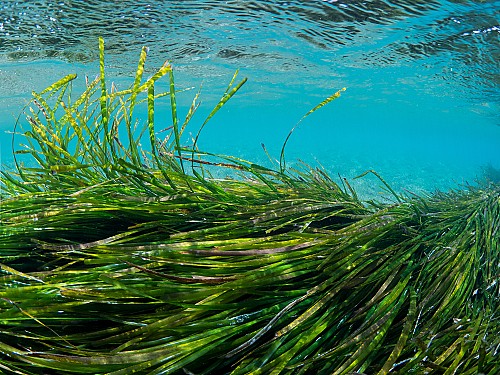
It highlights the richness of the seabed in the area, featuring Posidonia oceanica seagrass meadows, rocky bottoms, algae communities, and, at greater depths, significant expanses of maërl, rhodoliths, and coralligenous.
In addition to highlighting its high ecological value, the report presents data showing that the fishery resources in the area are among the lowest in the islands.
For example, the biomass of commercially important fish ranges from 1.4 kg/250 m² in shallow waters to 1.7 kg/250 m² in deep waters, far below the figures for marine reserves such as El Toro (one of the reserves with the best figures in the Balearic Islands), where biomass can reach up to 9.1 kg/250 m² (shallow waters) and 12 kg/250 m² (deep waters). Furthermore, studies show that most of the coastline along the Tramuntana mountain range is overexploited.
The proposal to create a marine reserve has a long history and is backed by public demand that began 18 years ago. Driven by this social request, the area was already the subject of a technical study by the government of the Balearic Islands in 2010, and subsequently, in 2021, another complementary study proposed expanding protection to 9,915.68 hectares.
The report also highlights public support for the initiative. According to a public consultation conducted last year by the Port Ramassat Platform, 65.5% of local respondents perceive a deterioration in the environmental condition of the coastline, and 94.4% are in favour of creating a Marine Reserve of Fisheries Interest.
This study was prepared by David López, from the Mediterranean Initiatives Foundation (FIM), and Nuria Salmerón, marine protected areas specialist at Marilles Foundation, and is supported by Marilles, FIM, and Save the Med.
Currently, there is broad consensus in favour of creating this Marine Reserve of Fisheries Interest. The report calls on the Ministry of Fisheries, Agriculture, and Food (MAPA) to take the necessary steps to establish this reserve as soon as possible and warns that delayingrisks losing a unique opportunity and would deal a severe blow to local communities that depend on the good conservation status of the sea to carry out their activities.