Illegal anchoring detected on Posidonia seagrass beds has fallen to 6.4%
Published 05.08.2026
Share
The 2026 Balearic Sea Report (IMB) has updated the Response chapter, setting out indicators on the management measures implemented to mitigate pressures on the marine environment in the Balearic Islands.
Protection of Posidonia
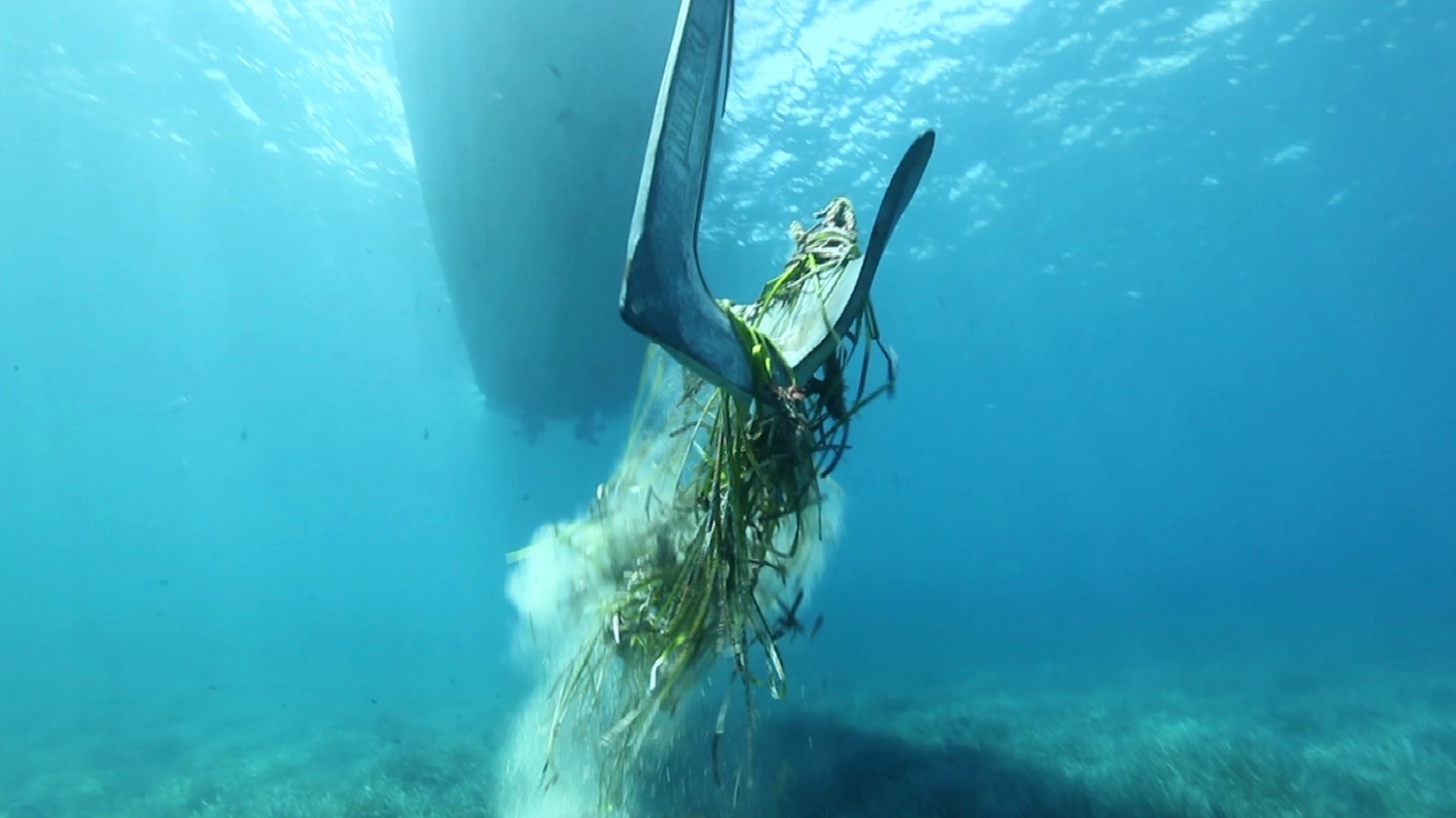
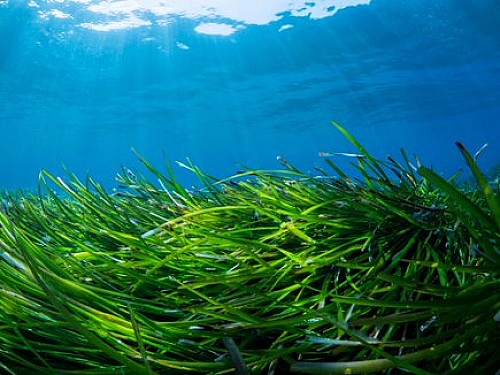
The number of recreational craft along the Balearic coastline has been rising, particularly during the summer season. However, the number of vessels sailing and anchoring off the beaches of the Balearic Islands remains unknown. This increase in the number of moored vessels poses a direct threat to seagrass meadows, particularly those of Posidonia oceanica. This marine plant is protected at national, and regional, and European levels, both as a species and for the habitat it forms. Itt has been proven that mooring using chains or ropes with anchors or mooring buoys contributes to the degradation of its meadows.
The Balearic government operates various services to reduce impacts on the seabed:
- Posidonia Monitoring Service of the Balearic Institute of Nature (IBANAT)
IBANAT’s Posidonia Monitoring Service operates when the coastline is at its busiest. In 2025, it had 19 vessels and carried out nearly 181,500 operations involving public information and monitoring.
This work continues to show results, as the percentage of improper anchoring detected has fallen to an average of 6.4% in the Balearic Islands, one of the lowest figures since the service was launched. The highest figure for improper anchoring (17.3%) was recorded in 2018. This downward trend is evident across all the islands except Ibiza, where improper mooring cases doubled between 2024 and 2025, rising from 1,719 to 3,468 in just one year.
- Low-environmental-impact buoy fields, mainly installed in areas classified as SCI (Sites of Community Importance)
These buoy fields help to reduce and prevent damage caused by mooring to sensitive habitats, particularly Posidonia seagrass beds.
In 2025, Ports IB managed eight such fields. Mallorca has the highest number of mooring fields (3) and available buoys (115). It is followed by Menorca, Cabrera, and Formentera (each with 2 mooring fields and 94, 90, and 88 buoys, respectively), and Ibiza (1 mooring field and 39 buoys).
Mallorca and Formentera have the highest number of moorings for small vessels, up to 8 metres in length. Ibiza, despite having the lowest total number of mooring buoys, allocates the highest proportion (21%) to vessels over 15 and over 20 metres in length.
Collection of floating litter
Increased human, tourist, and nautical pressure in the Balearic Islands is leading to greater waste generation and a higher likelihood of this waste ending up in the sea. As well as causing inconvenience to sea users, marine litter has a negative impact on marine species, communities, and ecosystems.
Although the solution to marine pollution lies primarily in good practices by society and public authorities regarding waste use and management, the floating litter collection system using vessels from the Coastal Clean-up Coordination Centre (CCNL), promoted by the Balearic government removes litter that washes up on the Balearic coastline.
The number of vessels assigned to this task has been reduced by almost half, falling from 40 vessels in 2010 to 22–23 since 2021. As a result, the amount of litter collected has also fallen considerably, from an annual average of over 200 tonnes between 2004 and 2010 to 28 tonnes in 2024 – that is, almost ten times less.
Throughout the monitoring period, around 40% of the waste collected has been plastic, highlighting the threat it poses to marine organisms, whether through ingestion, entanglement, or entry into the food chain.
Public engagement
Citizen science plays a key role in raising awareness and disseminating information, as participants not only contribute to scientific knowledge but also become more aware of and deepen their understanding of marine conservation through direct experience.
Public involvement in understanding the marine environment continues to grow in the Balearic Islands. The marine citizen science platforms Observadores del Mar (Sea Watchers), Biodibal, and DAPERA, run by the Balearic government's Species Protection Service, have provided thousands of new observations on marine biodiversity, thereby contributing to greater environmental awareness.
Between 2000 and 2025, Observadores del Mar validated more than 24,000 observations of marine species and habitats across Spain. It is worth noting that one in three of more than 8,000 observations were made in the waters of the Balearic Islands. Furthermore, 8 out of 10 observations validated in the Balearic Islands between 2020 and 2025 were recorded in marine protected areas.
Meanwhile, Biodibal has now recorded over 20,900 observations of the marine environment, covering more than 1,600 marine species. The DAPERA project continues to expand our knowledge of rare fish, with 455 sightings recorded.
The protection of Posidonia, the regulation of anchoring in marine habitats, the removal of waste, and public participation in monitoring marine biodiversity not only promote the health of the sea, but also contribute to the conservation of marine ecosystems and to safeguarding the environmental services they provide.