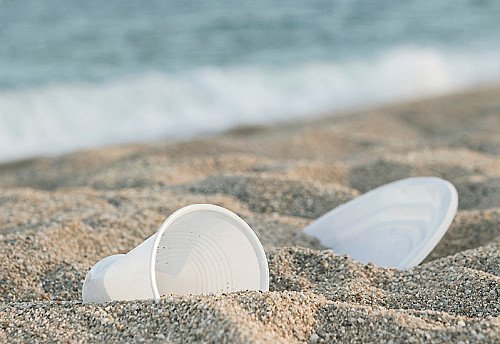
Incidents of faecal contamination on Balearic beaches double between 2024 and 2025
Published 12.01.2026
Share
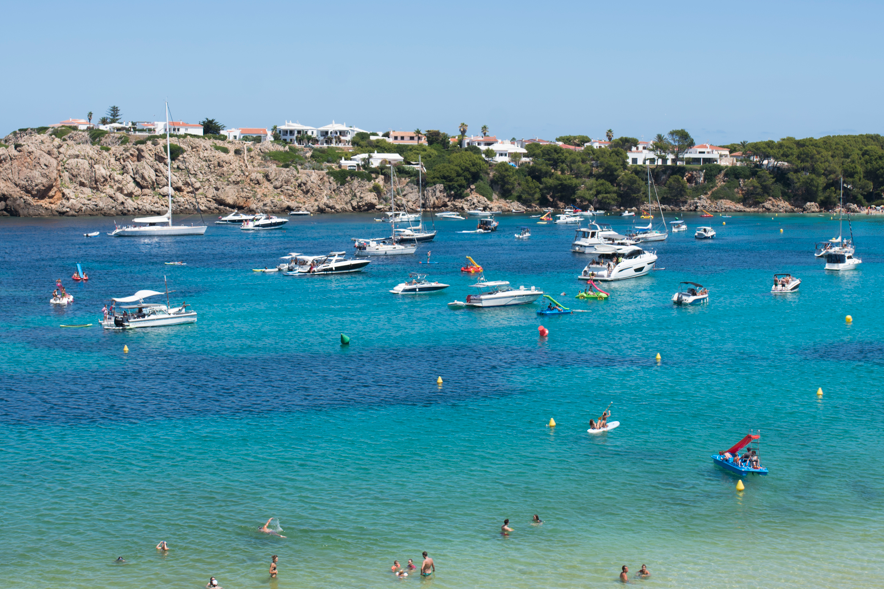
Photo: David Arquimbau
The quality of bathing water in the Balearic Islands has deteriorated over the last 15 years.
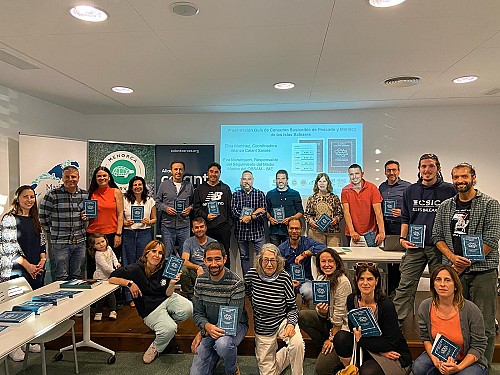
The Balearic Sea Report 2026 (IMB) launches with the presentation of the new chapter on beaches. The chapter analyses the state and evolution of these spaces in the Balearic Islands through three key areas: the sanitary quality of bathing water, use and user density, and the pressure exerted by anchored boats.
This new chapter highlights that the beaches of the Balearic Islands are not only suffering a progressive loss of water quality, but they are also facing increasing pressure from bathers and boats. The conclusions show that, despite overall quality and use values remaining within the usual parameters, the trend is towards a deterioration in water quality and an increase in human and nautical pressure.
The monitoring of users and boats on beaches, currently limited to Menorca, must be extended to the rest of the islands to improve the management of these areas and ensure both the conservation of marine ecosystems and a safe and satisfactory experience for users.
Bathing water quality in the Balearic Islands
Since 2010, the proportion of excellent quality waters has decreased, while the proportion of good quality waters has increased. In addition, urban beaches consistently perform worse in terms of water quality.
In 2025, 70% of beaches in the Balearic Islands received an excellent rating. Formentera and Menorca are the islands with the best bathing water quality, with 100% and 80% of their beaches receiving an excellent rating, respectively.
Ibiza is the island with the most points below the excellent category, with 29% of beaches rated as good and 10% as sufficient. All points with insufficient water quality were in Mallorca, specifically in Albercuix (Pollença) and Cala Egos (Santanyí).
The number of incidents of microbiological contamination doubled in 2025 compared to 2024, rising from 46 to 92. Of these, 20 were bathing bans, and 72 were recommendations not to bathe. The municipalities most affected by these episodes of faecal contamination were Sóller, Santanyí, Calvià, and Ciutadella.
Between 2020 and 2025, a total of 396 incidents were recorded: 313 recommendations not to bathe, 82 bathing bans, and one in which the water was later declared suitable for bathing. Eleven municipalities reported incidents every year during the study period (2020–2025): Santanyí, Calvià, Palma, Sant Josep de sa Talaia, Ciutadella, Pollença, Manacor, Sant Antoni de Portmany, Capdepera, Llucmajor, and Alcúdia.
Coliform sampling is only carried out during the summer, coinciding with the high tourist season, which means that water quality during the rest of the year is not covered by the official monitoring system.
Use of Menorca's beaches
The coastline is Balearic Islands main tourist resource attracting a high number of beachgoers during the summer. However, Menorca is the only island that has data on human and nautical pressure on its beaches. Between 2018 and 2024, the number of users on Menorca's beaches increased by 10%, and the percentage of beaches exceeding a maximum of 1,000 users per day rose from 14% to 17%.
The increase in users is gradual, interrupted by the health crisis resulting from the COVID-19 pandemic in 2020. The maximum number of users was recorded in 2021, decreasing by 10.5% in 2022, before increasing again to values similar to those of 2021 in 2023. The decrease in users in 2024 could be due to the methodology used that year.
In 2023 and 2024, urban beaches had the highest number of users compared to unspoiled beaches and are the ones with the least space per bather. In 2024, 17% of beaches had very high user densities, with less than 5 m² of beach area per user, which is considered insufficient.
In terms of the user capacity that each beach can support, since 2018 this has almost always been above the optimal limit of 100%. In 2024, 36% of beaches exceeded this capacity limit (>100%). These are mainly unspoiled beaches with services. The beaches with the highest user pressure (>200%) are also unspoiled beaches with services: Macarelleta (575.5%), Cala en Turqueta (424.7%), Cala Mitjana (371.3%), Es Talaier (311.2%), and Macarella (203.3%).
It is essential to continue with monitoring programmes and expand information on beach use to the rest of the islands. With proper monitoring, the Islands can improve the management of bathing areas, guarantee a satisfactory and safe experience for users, and ensure the sustainability and balance of these natural spaces, which concentrate a great deal of human pressure, among other impacts, in a very small area.
Boats anchored on Menorca's beaches
There has been a gradual increase in the number of boats anchored on Menorca's beaches; in the last five years, the number of boats anchored daily during the summer season increased by 48%.
Unspoiled beaches with services are those that bear the greatest nautical load. Between 2018 and 2023, the average number of boats per day on these types of beaches increased by 68%. In 2024, these beaches bore an average of 26.4 boats per day, while urban beaches registered a daily average of 14.2.
The maximum number of boats anchored at a beach increased by 137% between 2018 and 2023, reaching 142 boats at La Vall-Es Bot and Es Tancats beach, the highest value recorded in the 2018–2023 period. In 2024, a methodological change prevents a data comparison.
The increase in boats anchored on beaches, probably driven by a wide range of recreational boat rental options for tourists, carries environmental risks such as habitat destruction from anchoring, water pollution, and underwater noise.
Information on the number of boats anchored on beaches is essential for assessing the pressure they exert on the environment, studying the possible consequences for marine ecosystems, and establishing measures to ensure the safety of users (swimmers, snorkelers, divers, canoeists, etc.) and sailors, as well as the conservation of natural areas. It is therefore urgent to extend this information to the rest of the islands.
Beaches form complex, dynamic, and highly fragile systems that provide ecological and economic benefits to Balearic society. They help protect the coastline and are one of the main tourist attractions on the islands. Poor bathing water quality and high user numbers threaten their conservation. To establish proper beach management, it is necessary to understand their sedimentary evolution and their use by land and sea, and to have sanitary control of bathing waters.
Marilles in the media
- 15/01/2026 Augsburger Allgemeine: "Studie deckt auf: Diese Strände auf Mallorca sind besonders dreckig"
- 14/01/2026 La Vanguardia: "Baleares duplicó en 2025 los episodios de contaminación fecal en sus playas"
- 12/01/2026 Diario de Ibiza: "El informe del Mar Balear alerta: el agua de las playas de Ibiza es cada vez peor"