The Marine Conservation Plan: A roadmap for the Balearic Sea that must be backed by funding and ambition
Published 16.02.2026
Share

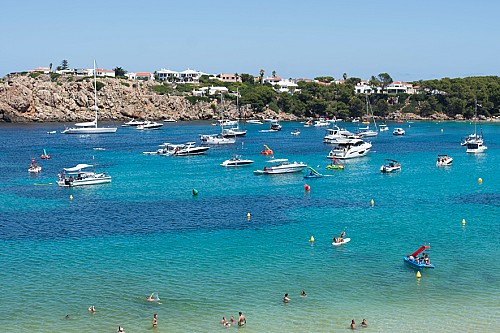
Photo: Vicent Guasch transferred to MARE for conservation purposes.
The Marine Conservation Plan presented by the Balearic Islands government is an important step towards a more vibrant, resilient, and productive sea. The document sets out significant commitments, including the promotion of new strictly protected areas in state waters, strengthened enforcement, the approval of conservation plans for vulnerable species and habitats, and the extension of fisheries co-management to the entire professional fleet before 2030. It also commits to expanding strict protection to at least 600 km² in regional waters by 2030 – an increase in protection that should be welcomed. Yet most of these areas are planned within the waters of Cabrera, a zone that already benefits from a high level of protection. Therefore, the real increase in new strictly protected areas outside this zone will be limited. We will need to monitor closely how this plan is implemented and ensure that areas with the most valuable and vulnerable seabed habitats are prioritised when expanding protection.
At Marilles Foundation, we particularly welcome the government’s commitment to expanding strictly protected areas. Scientific evidence shows that strict protection is the most effective tool for rebuilding fish populations, restoring ecosystems, and generating social and economic benefits, including for the fishing sector.
We interpret this plan as a response to the Balearic Blue Deal, presented in 2023 with the support of more than 200 companies and organisations – a figure that has grown in recent years. While it arrives later than desired, it has been presented at a key moment and with broad social backing. Moreover, it sets out a roadmap that should guide both the current government and future administrations, from whom we expect not only compliance but also greater ambition.
However, the challenge is clear: How do we turn words into action? Commitment to marine conservation cannot be measured by statements alone, but by timelines, clear responsibilities, and sufficient funding. We are concerned that the plan has been launched without a defined budget allocation to guarantee its effective implementation.
Ultimately, the government is responsible for delivering it. Its success, however, will depend on involving sectors that depend on the sea, such as fisheries, boating, and tourism; drawing on the best available scientific evidence; and cooperating with the government of Spain in areas beyond regional competence. The recent Balearic Sea Bill could be a key instrument in legally strengthening guarantees of compliance and consolidating many of the objectives set out in the plan. We trust that political parties will show the necessary statesmanship to support both documents, both in the Parliament of the Balearic Islands and in the Spanish Congress of Deputies.
The Balearic Islands have the opportunity to become an international benchmark in marine conservation. A well-protected sea is essential for the economic, social, and environmental future of the Islands. It is also the best insurance policy against the accelerating warming of the sea.
Marilles will actively monitor the implementation of the plan to ensure it delivers tangible results. Now is the time to rise to the challenge and turn this roadmap into a concrete reality for the Balearic Sea.
Aniol Esteban, Director of Fundación Marilles, said: “This is an important milestone for the future of the Balearic Sea. For many years, Balearic society has been calling for greater political action and increased funding to conserve the sea that surrounds us. The Balearic Blue Deal was the clearest expression of this demand. We welcome the government’s step forward and the announcement of significant measures. Words are welcome, but funding is lacking, and the level of ambition must be raised. Commitments require resources, not just statements, if they are to become reality. Otherwise, there is a risk that this will remain a pre-election manifesto.”