Some of you may not be entirely sure what we mean when we talk about seawater quality. It might sound like a technical issue, far removed from your daily life, but seawater quality is essential for the health of the sea and for your health, too.
Marine water quality determines whether the waters of our beaches remain transparent, whether we have healthy seagrass meadows, whether fishing has a future, and whether we can maintain a model of coexistence with our environment that does not work against the sea itself. Ultimately, seawater quality is the foundation that sustains the natural, social, and economic wealth of the Balearic Islands.
What do we mean when we talk about water quality?
When we talk about marine water quality, we refer to a set of physical, chemical, and biological factors that indicate whether the water can sustain a healthy ecosystem. Put another way, it is the process of assessing whether there are too many pollutants, too many nutrients, too much waste… or whether, on the contrary, the sea has the capacity to maintain its characteristic biodiversity. If seawater loses this quality, marine life suffers, and so do we.
We cannot have healthy, biodiverse ecosystems without good seawater quality. Protecting marine areas would also be useless if seawater quality is not ensured. It is therefore an essential prerequisite for any other conservation strategy.
The first rule to help the sea recover: Let it breathe
We often think that taking care of the sea means undertaking major projects. But science is clear: the best thing we can do is remove the pressures that harm it. This is known as passive restoration. We have seen it in marine reserves. When fishing stops, fish return, populations recover, and life regains space. The same happens with seawater quality, when we reduce the stressors, the sea responds.
The coastal waters of the Balearic Islands are not only an enormous natural asset, but they are also a thermometer of how we coexist with the environment. Seawater clarity, the health of Posidonia oceanica meadows, or the presence of sensitive species tell us far more than we might think. They indicate whether what we do on land and at sea —through our cities, waste management, wastewater treatment, tourism, and boating — is in harmony with the sea or, conversely, pushing it to the limit.
And what is the state of the seawater in the Balearic Islands?
Data from recent years point towards a worrying trend: the quality of our waters is gradually declining. The causes are multiple and cumulative:
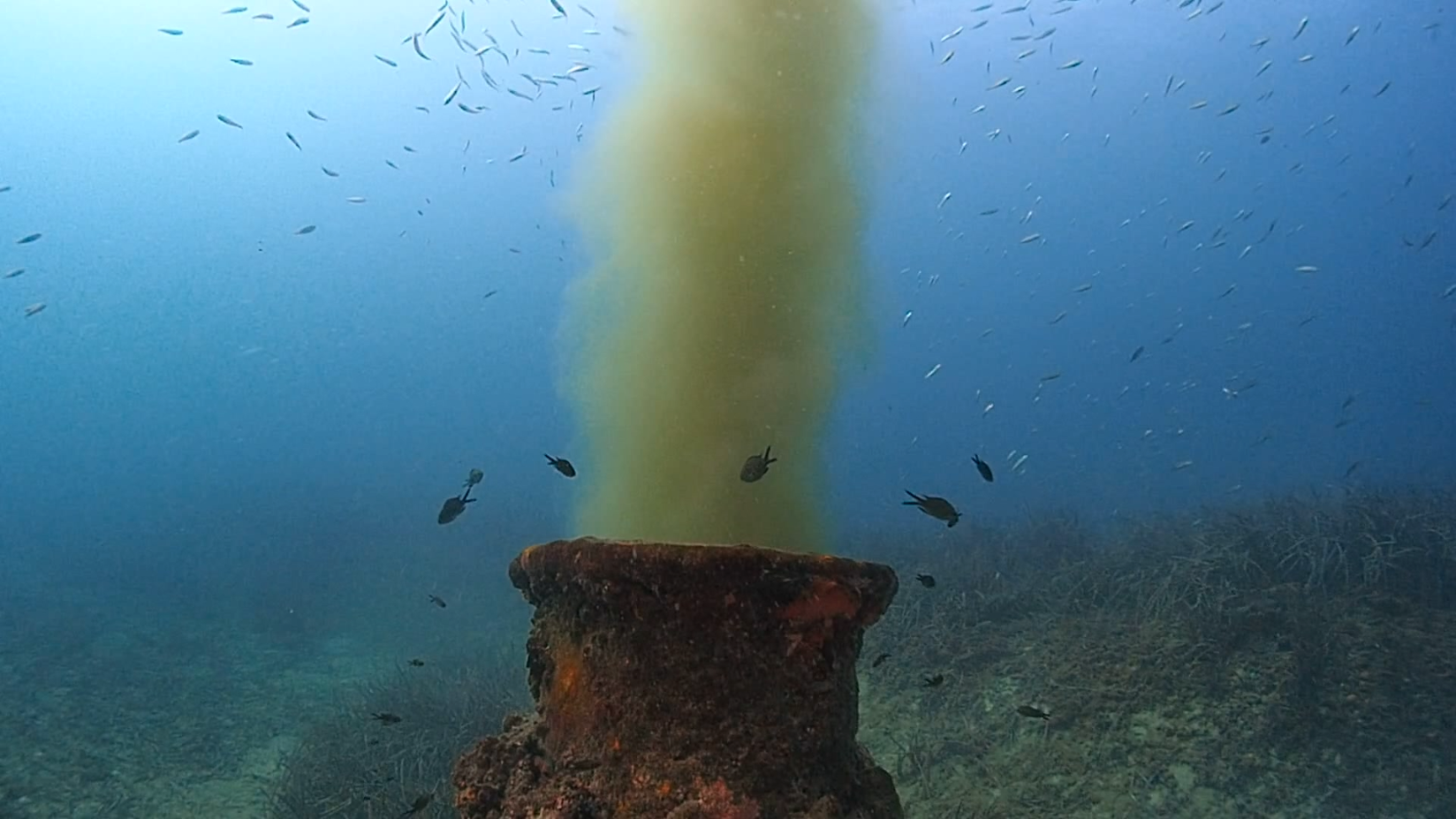
– Discharges of untreated or poorly treated wastewater and stormwater.
– Overflow events after storms.
– Nutrients and organic matter reaching the sea from sewer systems, septic tanks, or recreational vessels.
– Diffuse pollution: plastics, heavy metals, hydrocarbons, sunscreens, boat paints.
– Physical impacts such as dredging, anchoring, or coastal construction.
– And, as the final layer, climate change: lower oxygen levels, warmer waters, more critical episodes.
This is not an abstract list. It has real consequences: it affects biodiversity, Posidonia oceanica meadows, fisheries, tourism, and ultimately our relationship with the sea.
There is good news, too
There are several examples where bold policies have worked. In places where wastewater treatment has improved or impacts have been reduced, marine life has recovered strongly. These cases show that the sea is generous when we allow it to heal.
What now? Solutions, collaboration, and courage
This is not only about diagnosing problems but about finding shared pathways forward. Public administrations, scientists, conservation organisations, and citizens share a common goal: to reverse this trend. And we have the knowledge and technology to do so.
But scientific information is useless if it does not reach people. We need it to be part of the public conversation, helping us to understand that turbid marine water at the beach is not bad luck but a warning. It should inspire policies that look beyond easy headlines and guide everyday decisions.
Marine water quality is not merely an environmental issue. It is an indicator of how we coexist with our environment. It is a mirror reflecting the model we want: one that is sustainable and respectful, or one that is short-sighted and degrading. Moving towards a new way of understanding the sea means accepting that we all have a role. The sea speaks to us constantly through its clarity, its seagrass meadows, and its temperature. The question is: are we listening?
Raquel Vaquer - Balearic Sea Report coordinator