Eight organisations urge the Balearic government not to weaken the protection of the Pityusic marine reserves
Published 13.05.2026
Share
Caption: Toni Menor
Eight environmental organisations (Client Earth, GEN-GOB, Ibiza Preservation, GOB Formentera, GOB Mallorca, Ecologistas en Acción, OceanCare, Marilles Foundation, and Tursiops) have joined forces to call on the government of the Balearic Islands to abandon its intention to reduce the level of protection of all marine reserves of fisheries interest in Ibiza and Formentera. The draft decree for the expansion of the Freus reserve, currently under public consultation, would represent a setback in the conservation of the Freus area and of other marine reserves such as Punta de sa Creu, Vedrà-Vedranell, Bledes, and Tagomago, with profound ecological and socio-economic consequences.
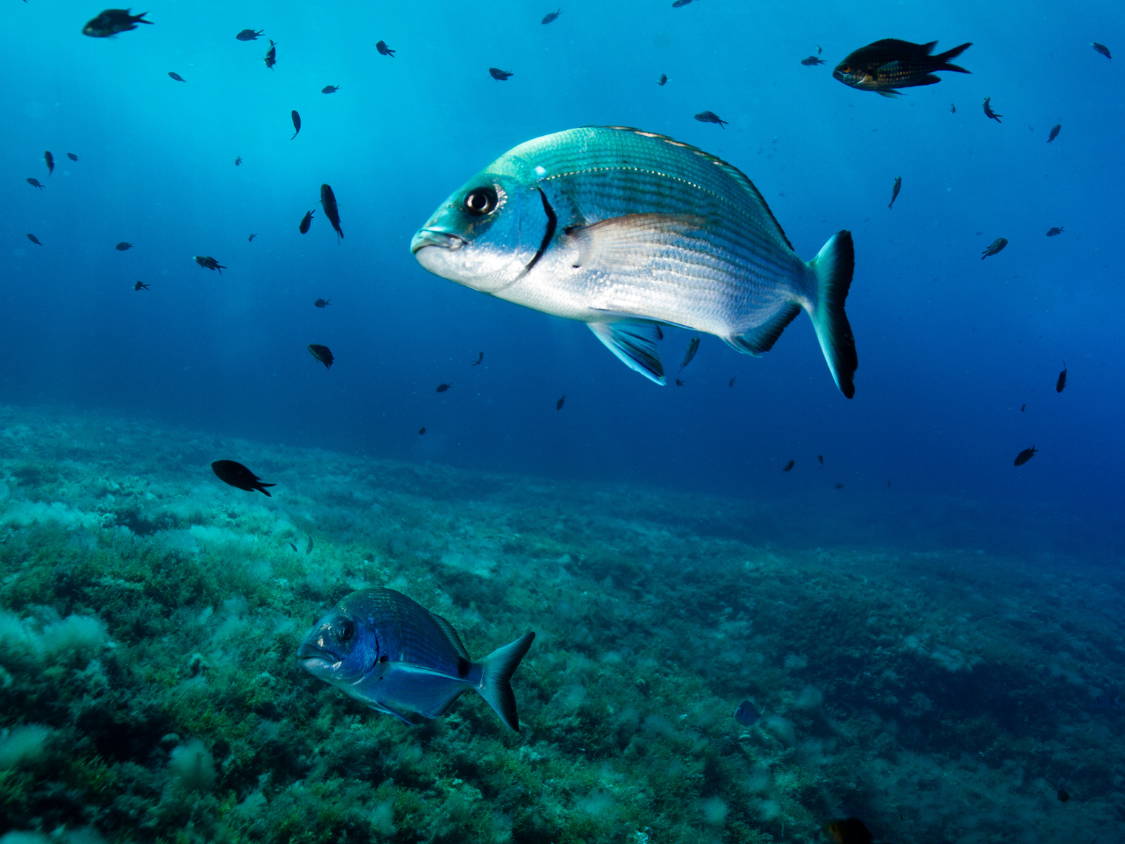
The draft decree includes measures such as the downward harmonisation of regulations with those of the Punta de sa Creu reserve. This would mean allowing recreational fishing gear currently restricted, such as live bait and trolling, as well as eliminating seasonal fishing bans that have proven effective. Among other measures, the proposal also seeks to remove the daily catch limit for the recreational fishing of species such as grouper, dentex, John Dory, and sea bream, resulting in additional mortality for species whose recovery is a key conservation objective. All are species with high market value. Thus, in addition to weakening the protection of the resource, the proposal facilitates catches that exceed personal consumption and could easily enter the black market. The agreement limiting lobster fishing gear deployment to 24 hours for professional fishers would also be broken, extending it to 48 hours on weekends in all inland waters.
The current proposal opens the door to a difficult contradiction to accept: expanding a protected area while simultaneously reducing its level of protection, without any scientific evidence to justify it. On the contrary, data clearly shows that protection works. Marine reserves are areas where ecosystems recover. They provide crucial benefits for ensuring a healthy marine environment and safeguarding the future of both professional and recreational fishing.
Benefits of marine reserves
Marine reserves of fisheries interest function as recovery areas for fish populations. For example, the technical synthesis on the monitoring of fish vulnerable to fishing in protected areas of the Balearic Islands shows that in the Freus area of Ibiza and Formentera, biomass has increased significantly since 2000. In shallow waters, biomass increased sixfold in the fully protected no-take reserve and fourfold in the partially protected reserve where fishing is regulated.
These protected areas not only benefit biodiversity but also secure the future of fishing, which depends on healthy and abundant resources. Weakening marine reserves would represent a step backwards in both fisheries management and biodiversity conservation, one that we cannot afford. What is needed is greater protection and stronger surveillance, along with the participation of all sectors, to ensure the future of fishing and preserve the wealth provided by the Mediterranean Sea. Consolidating and expanding this network of protected areas is not an ideological option, but a strategic necessity.
The data, therefore, demonstrates that reducing protection in these areas would be harmful to fisheries. If marine reserves act as engines for the recovery of fish populations, then over the medium and long term, removing restrictions in these areas would mean fewer resources for both professional fishing fleets and recreational fishers.
These protected areas also play an important role in climate change adaptation: more robust ecosystems are better able to withstand marine heatwaves and maintain essential ecological functions, such as carbon sequestration.
The eight organisations are calling on the government to pause the marine reserve expansion process to ensure it is carried out through a participatory process and based on scientific criteria. In this regard, they are demanding that the regional government open a dialogue with environmental organisations, the scientific community, and the fishing sector, starting with the extraordinary convening of the monitoring committees for all marine reserves in Ibiza and Formentera, since this draft decree affects all of them.
They also request that the expansion of the reserve include an increase in the strictly protected area.
Key facts
- There are currently 12 marine reserves of fisheries interest in the Balearic Islands, covering 0.93% of Balearic waters.
- Recreational fishing can be practised without specific restrictions in more than 96% of Balearic waters.
- Since the creation of the Balearic marine reserve network, the number of recreational fishing licences has increased to 45,000. It is therefore evident that the establishment of these reserves has not harmed this activity.
Marilles in the media
- 20/05/2025 Diario de Ibiza: "Un foro para impulsar compromisos ambientales entre los jóvenes"
- 11/03/2024 Periódico de Ibiza y Formentera: "TEDxDaltVila regresa a Ibiza con la temática ‘Todo Cambia’ en su segunda edición"
- 01/02/2023 Diario de Ibiza: "Las Pitusas tienen un volumen de navegación diez veces superior al resto de las Baleares"